
Polyethylene Water Tanks | Best Polyethylene Tanks in Egypt
Polyethylene tanks are among the most widely used and trusted water storage solutions for homes, commercial facilities, and industrial sites, thanks to their strength, light weight, and high resistance to weather conditions, rust, and corrosion. They are manufactured from high-quality polyethylene raw materials that meet health and safety standards, making them a safe choice for storing drinking water and many other liquids.
At El Dawlia for Tanks Company, we manufacture polyethylene tanks using the latest production technologies, relying on pure, food-grade materials that keep water quality intact for long periods. We also offer a variety of designs to suit different uses and spaces, whether vertical or horizontal tanks, with capacities starting from 500 liters up to 30,000 liters or more, depending on customer needs.
What Are Polyethylene Tanks?
Polyethylene tanks are one of the most commonly used types of water tanks, known for their high quality, long service life, and ability to keep water in the best possible condition. They are made from high-density polyethylene (HDPE), a strong and health-safe material with excellent resistance to weather conditions and chemicals, making it suitable for storing drinking water and many other liquids.
The tanks are manufactured using modern techniques that produce them as a single piece with no welds or joints, which increases their durability and reduces the risk of leaks. They are also available in various designs and capacities to suit residential, commercial, and industrial uses, ranging from small capacities to large tanks for factories and projects. Their multi-layer design helps maintain water quality and limits the growth of algae and bacteria, while also providing effective protection against UV rays and climate factors.
The uses of polyethylene tanks are not limited to drinking water storage; they also extend to irrigation water, treated water, certain chemicals, and industrial liquids, depending on the intended use. They are also an economical and practical choice thanks to their resistance to rust and corrosion, ease of installation, and low maintenance costs. At El Dawlia for Tanks Company, our tanks are made from high-quality materials that meet required standards, with a wide range of capacities and shapes to meet the needs of different sectors.
Polyethylene Tank Specifications
Polyethylene tanks are designed to provide the highest levels of safety and efficiency in water storage. They are made from high-quality materials using the latest manufacturing technologies to ensure durability and a long service life. While capacities and uses may vary, all high-quality tanks share a set of core specifications that ensure reliable performance and preserve water quality. The most important specifications of polyethylene tanks include:
- Food-grade polyethylene materials: made from health-safe, high-density polyethylene (HDPE) that does not react with water or affect its taste or odor, and offers excellent resistance to corrosion and chemicals.
- Single-piece construction with no welds: the tank is produced as a single piece with no joints or welds, reducing the risk of leaks and giving the tank greater strength and durability.
- Multi-layer design: available with two, three, or more layers, with each layer serving a specific function:
– An inner layer that is smooth, safe for drinking water, and easy to clean.
– A middle layer that reduces heat transfer and blocks light to limit algae and bacteria growth.
– An outer layer resistant to UV rays and weather conditions.
– High weather resistance: withstands high temperatures, direct sunlight, humidity, and rain without cracking or corroding.
- Reinforced structure for added durability. Features external supports that help distribute water pressure evenly, especially in large-capacity tanks.
- Fittings that simplify installation. Equipped with dedicated openings for inlet, outlet, overflow, and ventilation, with all accessories easy to install.
- Easy to clean and maintain. features a smooth, non-porous interior surface that reduces sediment buildup and simplifies cleaning and disinfection.
- A wide range of capacities and designs, with capacities starting from 500 liters up to 30,000 liters or more, with vertical and horizontal designs to suit different uses.
When choosing a water tank, it’s not just about capacity; it’s important to also check the quality of the raw material, the number of layers, the manufacturing method, and whether the tank meets standard specifications. That’s why the El Dawlia for Tanks Company is committed to offering polyethylene tanks that combine quality, durability, and ease of use, providing safe and effective storage solutions for a wide range of needs.
Advantages of Polyethylene Tanks
1- Safe for Drinking Water Storage
Polyethylene tanks are made from high-quality materials specifically designed for storing drinking water, so they do not react with water or affect its color, taste, or odor, helping maintain water quality and safety for daily use.
2- Resistant to Rust and Corrosion
Unlike metal tanks, polyethylene tanks are not affected by rust or corrosion caused by moisture or constant exposure to water, which helps maintain the tank’s efficiency and extend its service life.
3- Effective Protection from Sunlight
Multi-layer tanks are designed to resist UV rays, while the insulating layers help reduce light penetration into the tank, limiting algae and bacteria growth and preserving water quality for longer periods.
4- Strong, Weld-Free Design
The tank is manufactured as a single piece with no welds or weak points, reducing the likelihood of leaks and giving the tank a greater ability to withstand water pressure and continuous use.
5- Lightweight and Easy to Transport and Install
Despite the strength and durability of polyethylene material, it is lightweight compared to many other types of tanks, making transportation and installation faster and easier while reducing implementation costs.
6- Easy to Clean and Maintain
The tank’s smooth, non-porous interior surface prevents sediment and dirt buildup, making regular cleaning and disinfection easier and reducing the need for frequent maintenance.
7- Resistant to Impact and Weather Conditions
Polyethylene tanks are designed to withstand various operating conditions, offering good resistance to impact, high temperatures, humidity, and rain, making them suitable for use in different environments.
8- Wide Range of Capacities and Designs
Tanks are available in capacities from 500 liters up to 30,000 liters or more, with the option to choose between vertical and horizontal designs based on the space and intended use, offering great flexibility in meeting customer needs.
9- Low Operating and Maintenance Costs
Polyethylene tanks do not require complex maintenance or constant treatment, and their high resistance to corrosion and damage helps reduce operating and maintenance costs over the long term.
10- Long Service Life
When manufactured from high-quality materials, installed correctly, and cleaned regularly, the tank can maintain its efficiency for many years, making it an economical investment that delivers real long-term value.
How to Set Up a Polyethylene Tank
Proper installation is one of the most important factors in ensuring the efficiency of a polyethylene tank and extending its service life. A set of basic guidelines should therefore be followed to ensure safe operation and prevent future problems.
Steps for Installing Polyethylene Tanks
- Install the tank on a strong, level base, such as a concrete foundation or a metal structure capable of bearing the tank’s weight once full, ensuring the weight is distributed evenly.
- Make sure the ground can bear the load, especially for large-capacity tanks, to avoid sinking or deformation.
- Fully support the base of the tank and avoid leaving any gaps underneath it to ensure stability and proper pressure distribution.
- Choose a suitable installation location that allows easy access to the tank for periodic inspection, cleaning, and maintenance.
- Install connections securely using appropriate fittings, avoiding any pressure on the tank body from pipes or pumps.
- Test the tank after installation by filling it gradually with water and checking all connections to ensure there are no leaks and that the tank is stable.
Guidelines for Maintaining the Tank
For best performance, it is recommended not to move the tank while it is full of water, to follow the manufacturer’s instructions, and to periodically inspect the base and connections to ensure they are in good condition. Following these guidelines helps extend the tank’s service life, maintain its efficiency, and reduce the likelihood of malfunctions or leaks.
How to Install Polyethylene Piping Connections
Installing polyethylene tank connections properly is essential for operating efficiency and extending the tank’s service life. This begins with verifying the tank’s integrity, then installing the inlet and outlet connections and the float valve to control water level, in addition to the overflow line and ventilation opening, and connecting the pump as needed using high-quality fittings. After installation is complete, the tank should be tested gradually to ensure there are no leaks and that all accessories are working properly. It is also recommended to follow the manufacturer’s instructions and avoid making any additional openings in the tank body, in order to preserve its durability and ensure the best long-term performance.
How to Clean and Disinfect Polyethylene Tanks
To maintain water quality and tank efficiency, it is recommended to clean and disinfect polyethylene tanks every 3 to 6 months, or as needed depending on usage and water quality. Cleaning and disinfection steps:
- Drain the tank, leaving a small amount of water to help remove sediment.
- Clean the walls and bottom using a soft brush or cloth, avoiding metal tools or abrasive materials.
- Rinse the tank thoroughly with clean water to remove all sediment.
- Disinfect the tank with an approved solution safe for drinking water, then rinse thoroughly before reuse.
- Inspect the lid, connections, and inlet/overflow openings to make sure there is no damage or leakage.
Liter Capacities of Polyethylene Tanks
The El Dawlia Company for Water Tank Manufacturing offers a variety of tanks in vertical and horizontal shapes to meet different customer needs, with the option to choose the design that suits the installation space without affecting storage efficiency.
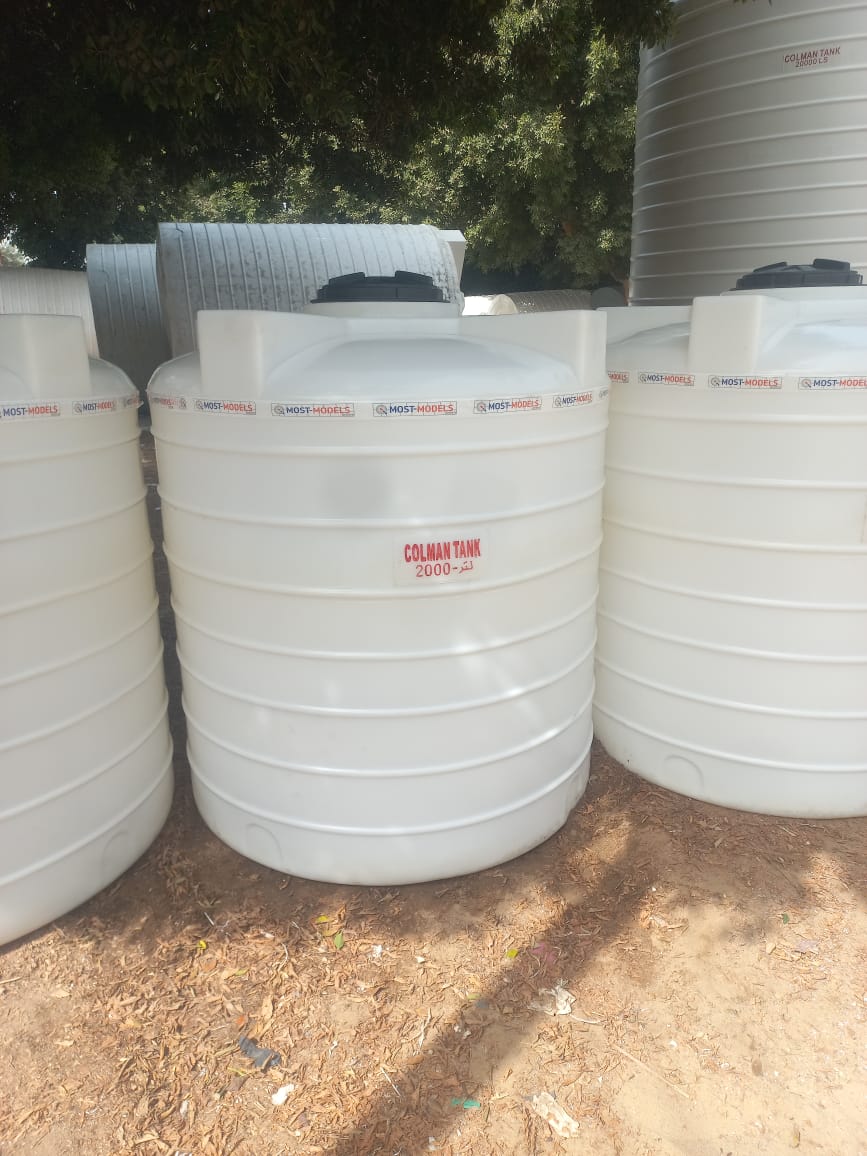
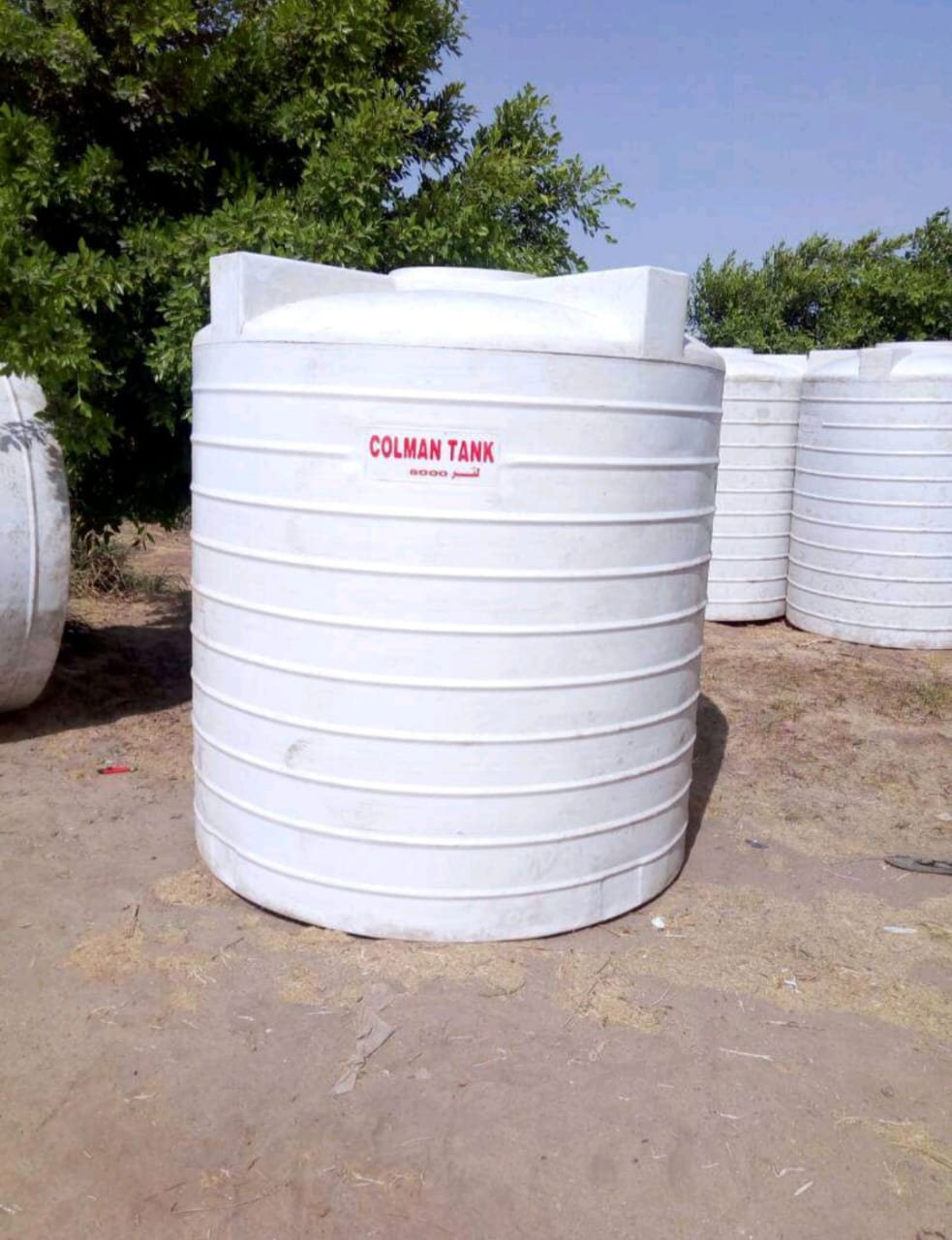
Vertical tanks are among the most widely used types, as they make efficient use of small spaces while providing large storage capacities, which is why they are widely used in homes, villas, commercial buildings, and factories.
Vertical Polyethylene Tanks
Vertical tanks are among the most widely used types, as they make efficient use of small spaces while providing large storage capacities, which is why they are widely used in homes, villas, commercial buildings, and factories, including:
- 500 liters = tank height 91 cm, diameter 85 cm
- 1,000 liters = tank height 126 cm, diameter 102 cm
- 1,500 liters = tank height 143 cm, diameter 116 cm
- 2,000 liters = tank height 150 cm, diameter 130 cm
- 3,000 liters = tank height 180 cm, diameter 150 cm
- 5,000 liters = tank height 190 cm, diameter 185 cm
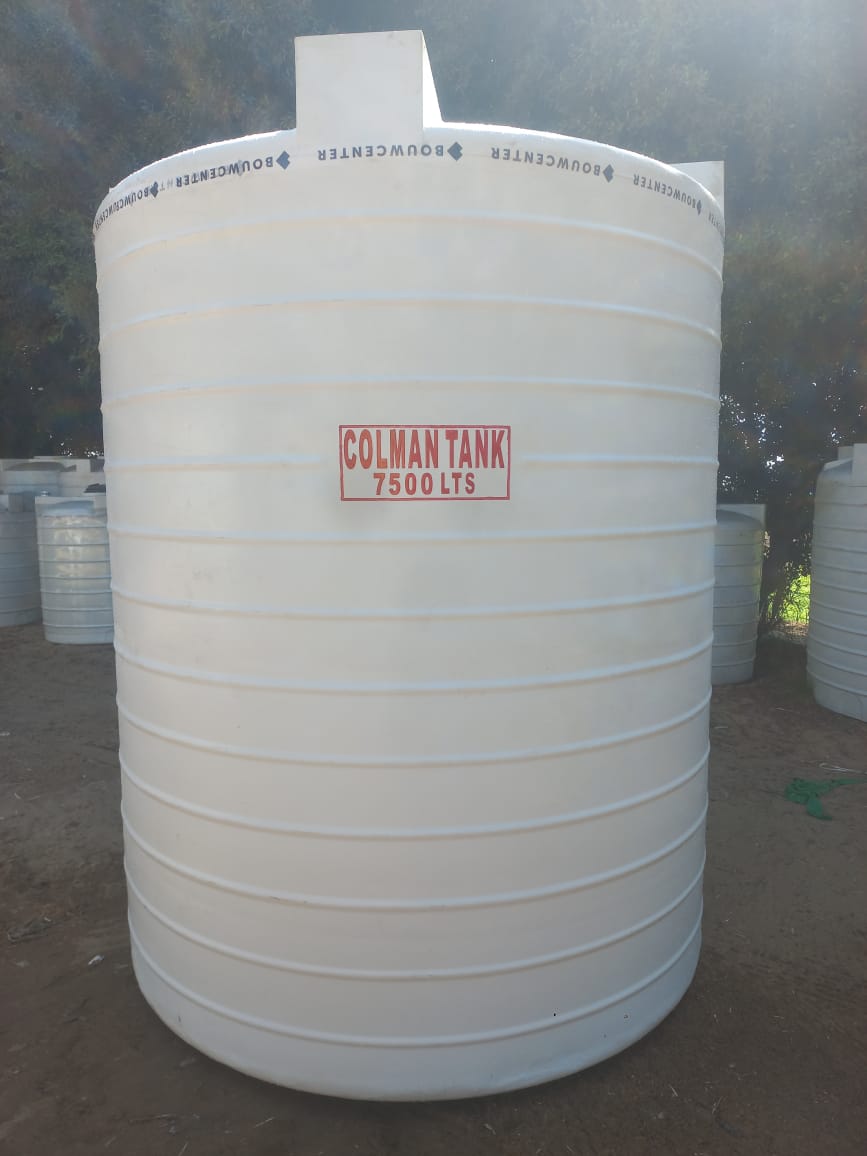
- 7,500 liters = tank height 270 cm, diameter 190 cm
- 10,000 liters = tank height 285 cm, diameter 215 cm
- 15,000 liters = tank height 300 cm, diameter 256 cm
- 20,000 liters = tank height 396 cm, diameter 258 cm
Horizontal Polyethylene Tanks
Horizontal tanks are used in locations with limited height and are also a suitable option for installation inside utility rooms, on rooftops with structural constraints, or in certain industrial and agricultural applications, including:
- 1,000-liter horizontal tank = length 145 cm – height 100 cm – width 90 cm
- 2,000-liter horizontal tank = length 180 cm – height 130 cm – width 120 cm
- 3,000-liter horizontal tank = length 230 cm – height 145 cm – width 135 cm.
How to Choose the Right Capacity
Choosing the right tank capacity depends on daily water consumption and the number of users. Here is a helpful guide based on the number of users and suggested capacity:
- 2 to 4 people: choose a capacity of 1,000 to 2,000 liters
- 6 to 10 people: choose a capacity of 2,000 to 3,000 liters
- Villas and large buildings: choose a capacity of 5,000 liters or more
- Factories and projects: based on daily consumption rate.
- Nationwide coverage with reliable after-sales service.
- Flexible design and manufacturing tailored to your requirements.
- Guaranteed quality at competitive prices.
- Backed by over 25 years of expertise in the tank manufacturing industry.
Prices of Polyethylene Tanks
Polyethylene tank prices in Egypt vary depending on several factors, so it’s not possible to set a fixed price for all tanks. The price depends on the liter capacity, the number of layers, the quality of the raw material, the manufacturing method, as well as the required fittings and accessories.
At the El Dawlia for Tanks Company, we are committed to offering the best value for money by manufacturing high-quality polyethylene tanks using materials that meet required standards, with a wide range of capacities suitable for residential, commercial, and industrial use.
Factors affecting the price of a polyethylene tank:
- Liter capacity: the larger the tank capacity, the higher the price, due to the increased amount of raw material used.
- Number of layers: multi-layer tanks provide better water protection, so they cost more.
- Raw material quality: using high-quality polyethylene increases the tank’s durability and affects its price.
- Tank design: prices vary depending on the design (vertical or horizontal), dimensions, or special specifications.
- Accessories and fittings: adding float valves, connections, covers, or special fittings affects the final price.
Tank capacity is one of the most important factors determining price, the larger the liter capacity, the greater the amount of raw material used in manufacturing, and therefore the higher the tank’s price. Capacities start from 500 liters and go up to 30,000 liters or more, depending on project requirements.
How to Get the Best Price for a Polyethylene Tank
When buying a water tank, don’t let price be the only deciding factor. Be sure to compare the quality of materials, the number of layers, the manufacturing method, the warranty period, and after-sales service. Investing in a high-quality tank helps reduce future maintenance and replacement costs and provides reliable performance for many years.
Need Help Choosing the Right Polyethylene Tank?
Get in touch with the team at the El Dawlia for Tanks Company for a free consultation, and let us help you choose the right capacity for your needs, along with the best solutions and prices.
Uses of Polyethylene Tanks
- Storing drinking water for homes, villas, and residential buildings.
- Residential and commercial buildings such as offices, malls, hotels, hospitals, and schools.
- Factories and industrial facilities for storing water and certain industrial liquids.
- Farms and irrigation networks for storing irrigation water and providing a water reserve.
- Desalination and water treatment plants, before or after treatment stages.
- Fire-fighting systems, to provide a reserve water supply.
- Storage of chemicals and industrial liquids in tanks designed for that purpose.
- Construction sites and projects, for water supply with easy transport and installation.
Types of Polyethylene Tanks
Polyethylene tanks are available in several types to suit different uses, and the appropriate type is selected based on the installation location, capacity, and intended use.
By shape
- Vertical: the most commonly used, suitable for homes and buildings, and makes better use of space.
- Horizontal: suitable for low-height locations and distributes weight better.
By number of layers
- Single-layer: for simple uses.
- Double-layer: greater durability and protection.
- Triple-layer: the most widely used, offering better protection of water from heat and sunlight.
- Multi-layer: for applications requiring the highest levels of insulation and protection.
By use
- Drinking water tanks.
- Irrigation and agricultural tanks.
- Desalination and treatment plant tanks.
- Chemical and industrial liquid tanks.
By capacity
- Small: 500–1,000 liters.
- Medium: 1,500–5,000 liters.
- Large: 7,500–30,000 liters or more.
Maintenance of Polyethylene Tanks
- Periodic inspection: checking the integrity and stability of the tank body and ensuring there are no cracks or damage.
- Checking connections: reviewing valves, gaskets, the float valve, and the inlet, outlet, and overflow openings.
- Cleaning and disinfection: cleaning the tank periodically to maintain water quality.
- Checking the lid: making sure the lid fits securely and replacing it if damaged.
- Checking the base: making sure the supporting base is sound and able to bear the tank’s weight.
- Fixing faults: addressing any leaks or damage as soon as they are discovered.
- Extending service life: committing to regular maintenance and using high-quality accessories and spare parts.
How to Choose the Right Polyethylene Tank
Choosing the right polyethylene tank is an important step in ensuring an efficient water reserve that meets your daily needs, whether for residential, commercial, or industrial use. The choice depends on several factors, such as the required capacity, installation location, material quality, and intended use, so it’s best to consider these factors carefully before making a purchase decision.
Determine the purpose of the tank
Start by determining the purpose of the tank: will it be used to store drinking water, irrigation water, treated water, or certain industrial liquids? Each use may require different specifications for material type, number of layers, and required fittings.
Choose the right capacity
Capacity is one of the most important selection criteria and should match daily water consumption and the number of users. Choosing a tank that’s too small may lead to running out of water quickly, while choosing one larger than necessary may increase costs without fully utilizing its capacity. Generally, smaller capacities suit homes and apartments, while larger capacities are preferred for residential buildings, farms, factories, and commercial facilities that need a larger water reserve.
Choose the right number of layers
Polyethylene tanks are available with one, two, three, or more layers. If the tank will be installed in a location exposed to direct sunlight, multi-layer tanks are the better choice, as they help reduce heat transfer and limit algae growth inside the tank.
Check the quality of the raw material
Be sure to choose a tank made from high-quality HDPE polyethylene, designated for drinking water storage where needed, since the quality of the raw material directly affects the tank’s durability, water safety, and product lifespan.
Choose the shape suited to the installation location
Polyethylene tanks come in vertical and horizontal designs, and the choice depends on the available space. Vertical tanks suit locations with limited space, while horizontal tanks are a suitable option in locations with limited height or where weight needs to be distributed over a larger area.
Check the manufacturing quality
It’s important to choose a tank manufactured as a single piece with no welds, with appropriate reinforcements to increase structural strength, as this reduces the likelihood of leaks and increases the tank’s ability to withstand water pressure over long periods.
Check the warranty and after-sales service
It’s recommended to buy the tank from a company that offers a clear warranty and technical support and maintenance service when needed, as this gives you greater confidence in the product and ensures quick access to assistance or spare parts if required.
Compare quality before price
While price is important, quality should be the primary factor in your decision. A tank made from high-quality materials may cost slightly more but offers a longer service life and reduces maintenance and replacement costs in the long run.
Consult specialists before buying
If you’re unsure about the right capacity or type, it’s best to consult a specialized team to help you choose the tank that suits your actual needs, taking into account the intended use, installation location, and available budget.
At the El Dawlia Company for Water Tank Manufacturing, we offer a wide range of polyethylene tanks in various capacities and designs, and our team provides the technical support needed to help you choose the most suitable tank, ensuring the best performance and the highest level of quality and reliability.
Why Choose the El Dawlia Company for Water Tank Manufacturing?
The El Dawlia Company for Water Tank Manufacturing is a specialized manufacturer of polyethylene tanks in various capacities and sizes, relying on high-quality HDPE materials and the latest manufacturing technologies to produce strong, safe, and long-lasting tanks.
- High-quality materials that meet standards and are safe for drinking water.
- Advanced single-piece manufacturing with no welds, reducing the risk of leaks.
- A wide variety of capacities and designs to suit all uses.
- Rigorous quality testing to ensure the highest levels of efficiency.
- Technical support and after-sales service to assist with installation, operation, and maintenance.
- Competitive prices while maintaining quality and delivery schedules.
The El Dawlia Company for Water Tank Manufacturing provides reliable storage solutions that combine quality, durability, and long-term performance to meet the needs of individuals, companies, and various projects.
Frequently Asked Questions About Polyethylene Tanks
What are polyethylene tanks?
Polyethylene tanks are tanks made from high-density polyethylene, used for storing drinking water and many other liquids. They are known for their light weight, resistance to rust and corrosion, and long service life.
Are polyethylene tanks safe for storing drinking water?
Yes, when manufactured from food-grade polyethylene materials that meet required standards, they are safe for storing drinking water and do not affect its taste, color, or odor.
What capacities are available for polyethylene tanks?
Polyethylene tanks are available in multiple capacities, starting from 500 liters up to 30,000 liters or more, to suit residential, commercial, and industrial uses.
What’s the difference between a vertical and a horizontal tank?
A vertical tank suits locations with limited space and offers large capacities with more efficient use of space, while a horizontal tank is preferred in locations with limited height or where weight needs to be distributed over a larger area.
What is the service life of polyethylene tanks?
The service life depends on manufacturing quality, usage, and maintenance. However, tanks made from high-quality materials and used correctly can operate efficiently for many years.
Do polyethylene tanks require regular maintenance?
Yes, it’s recommended to inspect the tank periodically, clean and disinfect it regularly, and ensure that connections and accessories are in good condition to maintain operating efficiency and water quality.
How often should a water tank be cleaned?
It’s best to clean and disinfect a water tank once every 3 to 6 months, though this may vary depending on water quality and how often the tank is used.
Are polyethylene tanks resistant to sunlight?
Yes, multi-layer tanks are designed to resist UV rays and reduce heat transfer into the tank, helping maintain water quality.
How do I choose the right capacity for a water tank?
Choosing the right capacity depends on the number of users, water consumption rate, intended use, and the space available for installation.
Can polyethylene tanks be used to store chemicals?
Some polyethylene tanks can be used to store certain chemicals, provided they are designed for that purpose and the stored material is compatible with the tank’s specifications.
What factors affect the price of polyethylene tanks?
The price of a tank is determined by several factors, including liter capacity, number of layers, raw material quality, manufacturing method, and included fittings and accessories.
Can a polyethylene tank be installed on a building’s rooftop?
Yes, it can be installed on rooftops, provided a strong, level base is available to bear the tank’s weight when full, and proper installation guidelines are followed.
Are tanks available in different shapes?
Yes, polyethylene tanks are available in vertical and horizontal designs, with various capacities to suit different spaces and uses.
Why choose polyethylene tanks over other types?
Because they are lightweight, resistant to rust and corrosion, easy to transport and install, have lower maintenance costs, and offer a long service life when used correctly.
How can I choose the right polyethylene tank?
You can choose the right tank by determining the intended use, required capacity, installation location, and number of layers, while making sure the materials are high quality and the manufacturer offers good after-sales service.