
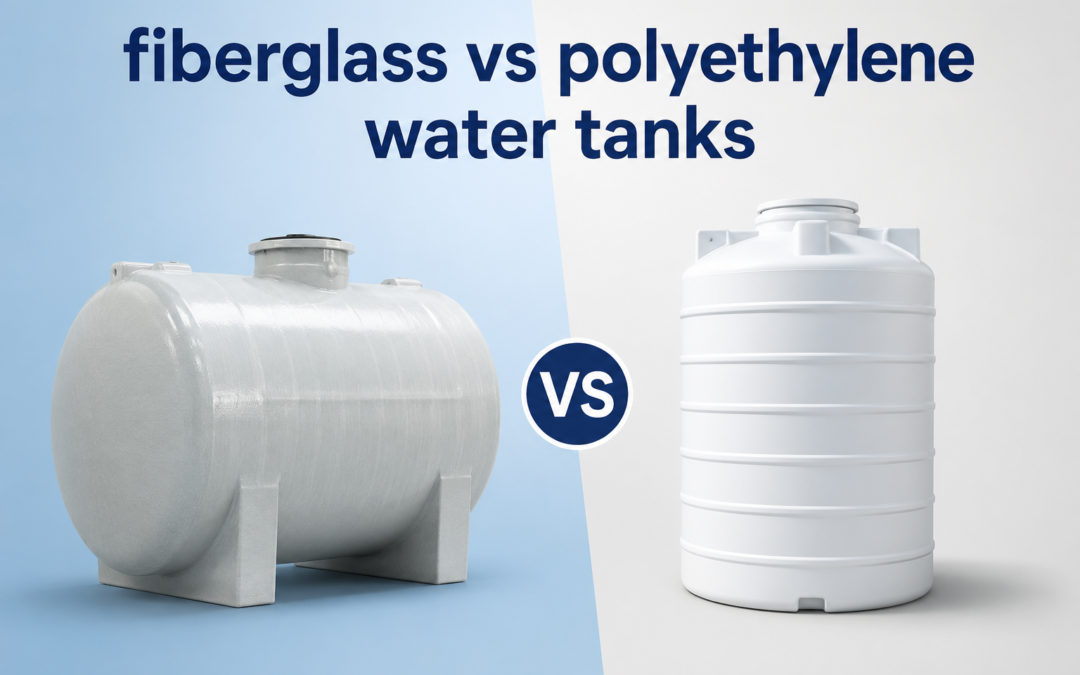
When searching for the best water tank for storing drinking water or for residential and industrial applications, you will find that fiberglass water tanks and polyethylene water tanks are among the most widely used types in the Egyptian market. Each type has different characteristics that make it suitable for specific applications, whether in terms of durability, resistance to weather conditions, service life, or purchase and installation costs.
Choosing the right water tank is an important step to maintaining water quality and ensuring that it is stored safely and hygienically for many years. Therefore, it is essential to understand the actual differences between the materials used to manufacture water tanks before making a purchasing decision.
In this article, we explore the difference between fiberglass water tanks and polyethylene water tanks from all aspects, starting with their manufacturing materials and applications, through their advantages and disadvantages, and ending with their prices and service life. This will help you choose the best water tank that suits your needs and budget.
What Are Fiberglass Water Tanks?
Fiberglass water tanks are among the most widely used types of water tanks in residential, industrial, and commercial projects, thanks to their high strength and ability to withstand various environmental conditions. They are manufactured from reinforced fiberglass combined with high-quality polyester resins, giving them excellent structural strength and resistance to corrosion, moisture, and chemicals.
These tanks can withstand high temperatures and direct sunlight without significantly affecting their properties or performance. They are also resistant to rust, making them an ideal choice for storing drinking water as well as for industrial and agricultural applications.
Fiberglass water tanks are available in various shapes and sizes, including vertical, horizontal, and underground tanks. Their capacities range from hundreds of liters to tens of thousands of liters, making them suitable for homes, villas, factories, hospitals, hotels, and water treatment plants.
Key Advantages of Fiberglass Water Tanks
- High strength and structural durability.
- Excellent resistance to rust and corrosion.
- Resistant to high temperatures and direct sunlight.
- Suitable for storing drinking water and various materials.
- Long service life with minimal maintenance requirements.
- Available in various capacities and shapes to suit different applications.
- Resistant to algae and bacterial growth when manufactured according to health and safety standards.
- Can withstand harsh weather conditions for extended periods.
What Are Polyethylene Water Tanks?
Polyethylene water tanks are among the most widely used types of water tanks in homes and commercial facilities, thanks to their lightweight design, ease of installation, and affordable cost compared to some other types. They are manufactured from High-Density Polyethylene (HDPE), a safe and hygienic plastic material approved for drinking water storage. HDPE is non-reactive with water and highly resistant to corrosion and rust.
These tanks are manufactured using the rotational molding process, which produces a seamless and uniform tank without welds or weak points. This reduces the possibility of leaks and improves the tank’s overall durability. Polyethylene water tanks are also available in multiple layers, most notably three-layer and four-layer tanks. These layers help provide thermal insulation and reduce sunlight penetration, helping preserve water quality and reduce the possibility of algae growth.
Polyethylene water tanks are available in a wide range of capacities and sizes to meet different needs, from residential applications to agricultural and commercial uses. They can also be easily installed on rooftops, in gardens, or in various storage areas.
Key Advantages of Polyethylene Water Tanks
- Manufactured from safe and approved materials suitable for drinking water storage.
- Lightweight and easy to transport and install.
- Resistant to rust and corrosion over time.
- Resistant to moisture and various weather conditions.
- Available with insulating layers that reduce the impact of sunlight.
- Seamless construction reduces the possibility of leaks.
- Available in various capacities and shapes suitable for homes and different facilities.
- Require minimal maintenance and are easy to clean and sanitize.
Difference Between Fiberglass Water Tanks and Polyethylene Water Tanks
Although fiberglass water tanks and polyethylene water tanks serve the same primary purpose of storing water, there are significant differences between them in terms of material, durability, service life, applications, and cost. Choosing the right type depends on the intended use, installation location, and available budget. The following comparison highlights the main differences between the two types:
|
Comparison |
Fiberglass Water Tanks |
Polyethylene Water Tanks |
|
Material |
Reinforced fiberglass with polyester resins |
High-Density Polyethylene (HDPE) |
|
Weight |
Relatively heavier |
Lightweight and easier to transport |
|
Rust and Corrosion Resistance |
Excellent | Excellent |
|
Sunlight Resistance |
Very high |
Depends on the number of layers and manufacturing quality |
|
Service Life |
Very long with regular maintenance |
Long with proper use |
|
Ease of Installation |
May require additional preparation in some cases |
Easy and quick to install |
| Applications |
Homes, factories, hospitals, hotels, and large-scale projects |
Homes, villas, farms, shops, and commercial facilities |
|
Maintenance |
Requires basic periodic inspection |
Easy to clean and maintain |
|
Cost |
Relatively higher |
More economical |
Difference Between Fiberglass Water Tanks and Polyethylene Water Tanks
Quality and durability are among the most important factors to consider when choosing a water tank, as they directly affect the tank’s service life and its ability to maintain water quality. Although both fiberglass and polyethylene water tanks offer high quality when manufactured according to standard specifications, each material has unique characteristics that distinguish it from the other.
Fiberglass water tanks
Are known for their strong and rigid structure. They are manufactured from reinforced fiberglass, which enables them to withstand heavy loads and harsh environmental conditions without cracking or deforming. They also offer excellent resistance to moisture, corrosion, and chemicals, making them widely used in industrial and commercial projects as well as water treatment facilities.
Polyethylene water tanks
On the other hand, polyethylene water tanks are manufactured from High-Density Polyethylene (HDPE), which offers flexibility and impact resistance. This reduces the possibility of the tank cracking or breaking during transportation or installation. Polyethylene is also non-reactive with water and resistant to rust, making it an ideal choice for residential and light commercial applications.
In general, fiberglass water tanks can be considered a better choice for applications that require higher durability and a long operational life under harsh conditions, while polyethylene water tanks provide excellent performance for everyday applications with greater ease of transportation and installation.
Quick Comparison
|
Factor |
Fiberglass Water Tanks |
Polyethylene Water Tanks
|
|
Load-Bearing Capacity |
5/5 |
4/5 |
|
Impact Resistance |
4/5 |
5/5 |
|
Crack Resistance |
Excellent |
Excellent |
|
Corrosion Resistance |
Excellent |
Excellent |
|
Heavy-Duty Applications |
Best choice |
Suitable for medium-duty applications |
Difference Between Fiberglass Water Tanks and Polyethylene Water Tanks in Terms of Service Life
Service life is one of the most important criteria customers consider when purchasing water tanks, as everyone wants a tank that can maintain its efficiency for many years without requiring frequent replacement or maintenance.
Fiberglass Water Tanks
Fiberglass water tanks offer a long service life due to their high resistance to weather conditions, moisture, and sunlight. The materials used in their manufacturing provide excellent durability and allow them to withstand continuous use in various environments, whether residential or industrial.
Polyethylene Water Tanks
Polyethylene water tanks also offer a good operational lifespan, especially when manufactured from high-quality materials and equipped with UV-resistant layers. Regular cleaning and proper installation in a suitable location help maintain their efficiency for extended periods.
Ultimately, service life does not depend solely on the type of tank. It is also affected by several factors, including manufacturing quality, material thickness, installation method, and regular maintenance.
Factors Affecting the Service Life of Water Tanks
- Quality of the raw materials used in manufacturing.
- Tank wall thickness and its ability to withstand pressure.
- Direct and continuous exposure to sunlight.
- Installation quality and selecting a suitable location.
- Regular cleaning and sanitization of the tank.
- Following the manufacturer’s instructions.
Tip: If you are looking for a tank that can withstand heavy-duty use or industrial environments, fiberglass may be a suitable option. However, for residential or standard commercial applications, polyethylene water tanks provide excellent performance with greater ease of handling.
Difference Between Fiberglass Water Tanks and Polyethylene Water Tanks in Terms of Heat and Sunlight Resistance
Water tanks are often exposed to direct sunlight and high temperatures, especially when installed on rooftops or in open areas. Therefore, the tank’s ability to resist heat and maintain water quality is one of the most important factors to consider before purchasing.
Fiberglass Water Tanks
Fiberglass water tanks offer high resistance to heat and ultraviolet (UV) radiation. They are manufactured from durable materials that can withstand harsh climatic conditions without significantly affecting their structure or performance. The protective outer layer also helps reduce the impact of sunlight, contributing to maintaining water quality and reducing excessive water temperature increases.
Polyethylene Water Tanks
Polyethylene water tanks also provide a good level of protection, particularly when manufactured using multiple-layer technology and UV-resistant materials. These layers help reduce heat transfer into the tank and minimize the impact of direct sunlight, helping preserve the water for longer periods.
The actual performance of both types depends on manufacturing quality, the number of layers, and the installation location. Therefore, it is always recommended to choose a tank from a reliable water tank manufacturer that uses high-quality materials and follows approved manufacturing standards.
Difference Between Fiberglass Water Tanks and Polyethylene Water Tanks in Terms of Rust and Corrosion Resistance
When choosing a water tank for long-term use, resistance to rust and corrosion is one of the key factors that affects tank efficiency and the safety of the stored water, especially in areas with high humidity or industrial environments.
Fiberglass Water Tanks
Fiberglass water tanks do not contain metals that are susceptible to rust. They also offer high resistance to moisture, chemicals, and corrosion, making them suitable for harsh environments and industrial projects that require a high level of durability.
Polyethylene Water Tanks
Polyethylene water tanks offer natural resistance to rust and corrosion because they are made from a plastic material that does not react with water or moisture. They do not require painting or additional treatments to maintain their performance over time.
Therefore, both types are suitable options for drinking water storage, provided that the tank is manufactured according to standard specifications and is regularly cleaned and maintained.
Difference in Terms of Weight, Transportation, and Installation
The weight of a water tank and its installation method directly affect transportation costs, installation ease, and suitability for the intended location. Therefore, this is an important factor to compare before purchasing a tank.
Polyethylene Water Tanks
Polyethylene water tanks are lighter than fiberglass water tanks, making them easier to transport and install, especially in homes, villas, and rooftops where space may be limited or where the tank may need to be moved manually in some cases.
Fiberglass Water Tanks
Although fiberglass water tanks are heavier, their weight contributes to greater structural strength and stability. This makes them suitable for large-scale projects and industrial and commercial applications that require tanks capable of withstanding continuous operating conditions.
The appropriate choice also depends on the tank capacity and installation location. Large-capacity tanks require a level concrete base and professional installation to ensure proper load distribution and maintain the tank’s efficiency throughout its service life.
Difference Between Fiberglass Water Tanks and Polyethylene Water Tanks in Terms of Price
Price is one of the main factors influencing a water tank purchasing decision. However, comparing fiberglass and polyethylene water tanks should not be based on price alone. Quality, service life, intended use, and long-term maintenance costs should also be considered.
Polyethylene Water Tanks
Polyethylene water tanks are an economical option for residential applications. They are available in a wide range of capacities and prices to suit different budgets while maintaining good quality when purchased from a reliable manufacturer.
Fiberglass Water Tanks
Fiberglass water tanks can be more expensive for certain capacities. This is due to the nature of the materials used in their manufacturing, their high strength, and their use in many industrial and commercial applications that require higher levels of durability and performance.
It is important to note that price alone does not determine the quality of a water tank. Instead, buyers should consider the overall value it provides in terms of storage efficiency, service life, warranty, and after-sales service.
Key Factors Affecting Water Tank Prices
Tank Capacity: The larger the capacity, the higher the price.
Raw Material Quality: Using high-quality materials affects both price and performance.
Tank Wall Thickness: Thicker walls provide greater durability and may increase the cost.
Number of Layers: In polyethylene water tanks, the number of layers affects the level of insulation and protection.
Manufacturer: Choosing a reliable water tank manufacturer ensures high manufacturing quality and reliable after-sales service.
Warranty: Tanks with longer warranties may have a higher price but provide greater peace of mind.
Transportation and Installation Costs: These vary depending on the tank size and installation location.
Important Information: When comparing prices, make sure you compare tanks with similar capacities, specifications, and quality levels. Relying on price alone may lead to choosing a tank that does not meet your needs or requires early replacement.
Which Offers Better Value for Money?
If your goal is to purchase an economical tank for residential use with easy transportation and installation, polyethylene water tanks are a suitable option in many cases.
However, if the application requires the tank to withstand harsh operating conditions, large capacities, or industrial and commercial applications, fiberglass water tanks may be a better long-term investment due to their durability and ability to withstand heavy-duty use.
Therefore, it is not possible to say that one type is universally better than the other. The right choice depends on the intended use, required capacity, available budget, and manufacturing quality.
How Do You Choose Between Fiberglass Water Tanks and Polyethylene Water Tanks?
There is no single type that is considered the best for every situation. Choosing a water tank depends on your actual needs, the intended application, and the location where the tank will be installed. Therefore, it is important to compare the different features and characteristics before making a purchasing decision.
Choose Fiberglass Water Tanks If You Are Looking For:
- A tank capable of handling heavy-duty use for extended periods.
- Large capacities for projects or industrial facilities.
- High resistance to weather conditions and harsh environments.
- Excellent durability and a long service life.
- Choose Polyethylene Water Tanks If You Are Looking For:
- An economical tank for residential use.
- Easy transportation and installation.
- Lightweight construction with good performance.
- A tank suitable for rooftops, villas, or residential buildings.
In all cases, the most important factor is choosing a water tank manufacturer with extensive manufacturing experience and who uses approved, high-quality materials. Manufacturing quality directly affects the tank’s performance and service life, whether it is made from fiberglass or polyethylene.
Why Is El Dawlia Company the Ideal Choice for Water Tank Manufacturing?
Choosing the right water tank starts with choosing the right manufacturer, as material quality, manufacturing precision, and after-sales services play a major role in the tank’s performance and service life. Therefore, it is important to work with a reliable water tank manufacturer with real industry experience and a commitment to quality standards throughout every stage of production.
El Dawlia Company for tanks is committed to providing integrated solutions for the manufacturing and supply of fiberglass water tanks and polyethylene water tanks, meeting the needs of residential, commercial, and industrial sectors. The company offers a wide range of capacities and designs suitable for various applications.
Why Do Customers Choose El Dawlia Company?
- Manufacturing water tanks using high-quality materials that meet required specifications.
- Providing fiberglass water tanks and polyethylene water tanks in various capacities and designs.
- Following quality standards to ensure tank efficiency and long service life.
- Offering solutions suitable for residential, commercial, and industrial applications.
- Helping customers select the appropriate tank type and capacity according to their specific needs.
- Providing technical support and after-sales services.
- Offering competitive prices while maintaining high manufacturing quality.
Whether you are looking for a fiberglass water tank capable of withstanding heavy-duty applications or a lightweight polyethylene water tank that is easy to transport and install, choosing the right tank from an experienced and capable manufacturer ensures a product that combines quality, durability, and long-term performance.
Frequently Asked Questions About the Difference Between Fiberglass Water Tanks and Polyethylene Water Tanks
What is the difference between fiberglass water tanks and polyethylene water tanks?
The main difference lies in the manufacturing material and the characteristics of each type. Fiberglass water tanks are known for their high durability and ability to withstand harsh conditions, while polyethylene water tanks are lightweight and easy to transport and install, making each type suitable for different applications.
Which is better for storing drinking water?
Both types can be used to store drinking water when manufactured from approved materials that meet health and safety specifications. Regular cleaning and sanitization are also essential to maintain water quality.
Which type lasts longer?
Service life depends on manufacturing quality, the materials used, installation method, and maintenance. When these factors are properly managed, both fiberglass and polyethylene water tanks can provide long-term performance.
Can polyethylene water tanks withstand sunlight?
Yes. Polyethylene water tanks can withstand sunlight, especially when they are multi-layered and manufactured from high-quality materials with UV-resistant properties. This helps maintain water quality and reduce the impact of heat.
Do fiberglass water tanks require maintenance?
Yes. Fiberglass water tanks require basic periodic maintenance, including regular cleaning and inspection. This helps maintain their efficiency and extend their service life.
How do I choose the right water tank?
Choosing the right tank depends on several factors, including:
Number of users.
Required tank capacity.
Tank installation location.
Intended use, whether residential, industrial, or commercial.
Available budget.
Manufacturing quality and warranty provided.
Choosing the right water tank is an important step in ensuring that water is stored safely and efficiently for many years. In this article, we explained the difference between fiberglass water tanks and polyethylene water tanks in terms of materials, durability, service life, resistance to weather conditions, prices, and applications to help you make a purchasing decision that suits your needs.
If you are looking for the right water tank for your specific requirements, you can contact El Dawlia Company, and our team will help you choose the most suitable water tank based on your needs, application, and budget.